Every Skyline GT-R Generation Explained: C10 to R35
Nissan Skyline GT-Rs are a pinnacle of Japanese engineering: twin turbos, advanced AWDs, and RB26DETTs, mixed them to make a machine that dominates, it started as a humble Prince Skyline to a beast known by many as "Godzilla", today we're going to go deep-dive of one of JDM's holy grail of Japanese engineering from the beginning until its sunset.
|
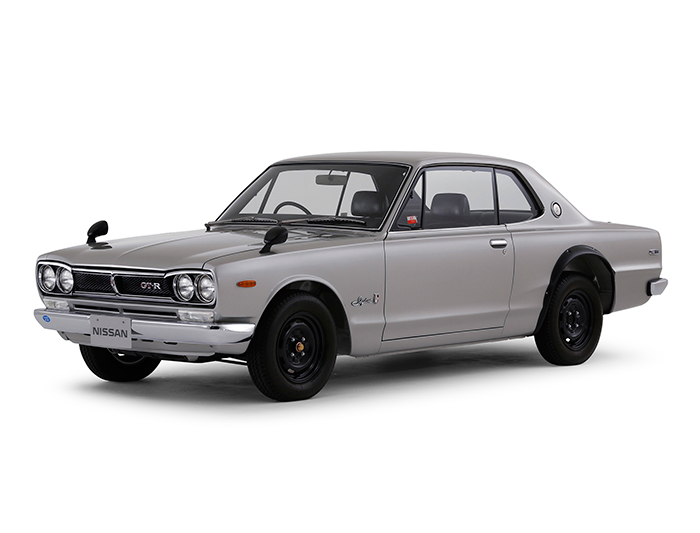
| A 1972 Nissan Skyline 2000 GT-R Hardtop in Silver |
1. Nissan Skyline 2000 GT-R (C10) — The Hakosuka
It comes with two variants: A sedan (PGC10) which was introduced in February 1969 and a coupe (KPGC10) which was introduced in October 1970, both of these variants came with the Nissan S20 engine, which can be found on Fairlady Z432 and its racing cousin the Z432R, producing 160HP at 7,000 RPM and a 177 Nm; 130 lb-ft at 5,600 RPM topping at approximately 200 km/h (124 mph) and a weight of only just 1,100 kg (2,425.1 lb), its boxy design gave it a nickname "Hakosuka" which means "Boxy Skyline". While 160 HP sounds too low for modern standards but in the late 60's. It's a beast! The Nissan S20 engine was an evolution from a prototype race car- The Prince R380 and its GR-8 engine, making it street legal, and you have yourself a machine built to dominate. The Skyline 2000 GT-R (sedan) entered the racing scene in 1969 and won its first race just like that! The Skyline 2000 GT-R came home with 1,000 wins from 1969 to 1972. This is where it all began, the rising of Godzilla. They built a total of 1,945, of which the sedan version is a bit rarer than the coupe version. The next car is a bit of a disappointment-
|
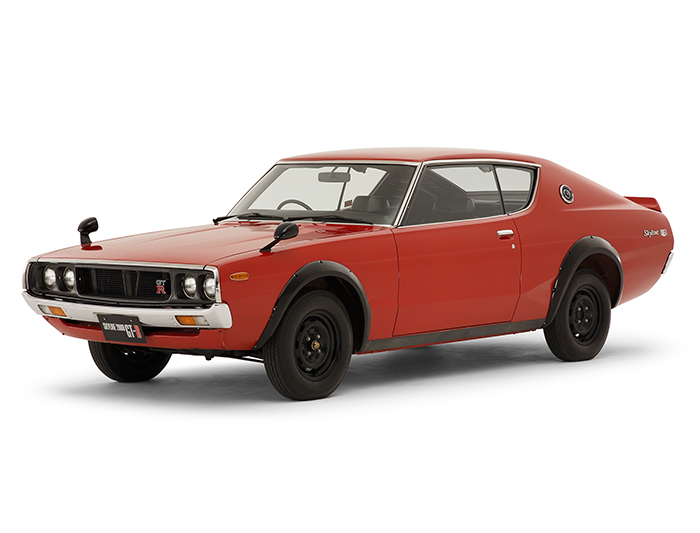
| A 1973 Nissan Skyline 2000 GT-R in red |
2. Nissan Skyline GT-R (KPGC110) — The Kenmeri
This car to me is a disappointment, sure it has the same engine- The Nissan S20, making still 160 HP, slightly heavier (1,145 kg — 2,524.3 lb), all-around disc brakes (The previous one has rear drum brakes), same top speed, and it no longer offers a sedan, this is a proper sports car. Now don't get me wrong, this car is beautiful with a muscle car aesthetics, but what disappoints me is that the 1973 Oil Crisis killed this car that was introduced before it hits them, following the increasing emission standards in Japan. Only 197 were built, and none of them entered the racing scene; only a concept of the racing version of this exists; it was known by everyone as "Kenmeri" due to a popular C110 Skyline ad campaign featuring a couple ("Ken & Mary") in Hokkaido; it even inspired a hit song. This is the last car bearing the badge of the GT-R, the next car isn't a GT-R but part of the Skyline series-
|
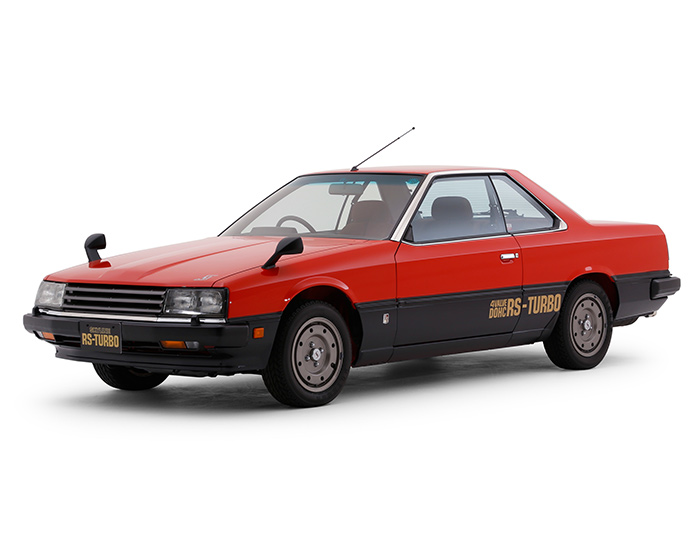
| Pre-Iron Mask Nissan Skyline 2000 Turbo RS in iconic red and black |
3. Nissan Skyline 2000 RS and RS Turbo (DR30)
This car bears a letter R, so it's "legally" a GT-R, but a twist! These cars were introduced from 1981 to 1985 as a sporty coupe version of their boring sedans, but instead of an Inline-6, which Nissan was known for, it's an Inline-4! Yup it's powered by a FJ20E on an RS model and FJ20ET on the RS Turbo, they made 150 HP at 6,000 RPM (which is less than what the Nissan Skyline 2000 GT-R made) and 181 Nm (133 lb-ft) of torque at 4,800 rpm and a top speed of around 190 km/h (118 mph) for the RS model and 188 HP at a slightly increased 6,400 RPM and 225 Nm (166 lb-ft) of torque at 4,800 rpm with a top speed of 220 kp/h (136 mph) for the RS Turbo. The RS weighs only around 1,050 kg to 1,080 while the RS Turbo weighs a bit heavier at 1,120 kg to 1,150 kg if luxury extras are added. What made this car so iconic is that its racing sibling- The Nissan Skyline RS Silhouette Formula, with its bosozoku-like "silhouette" body, its menacing "iron mask" look, and a fire-spitting turbocharged LZ20BT inline-4 engine making 560 HP and 540 N⋅m (400 lb⋅ft)! This beast won 7 races from 1982 to 1983. The Turbo C is a different story; it has the same engine and power, and being the only front-engine Group C race car, it was meant to rival the Porsche 956. Unfortunately, none of the Turbo C race cars won, but it managed to overtake the 956 in the Fuji 500 in 1983 (though retired after 43 laps). The next car, it gives us a proper return-
|
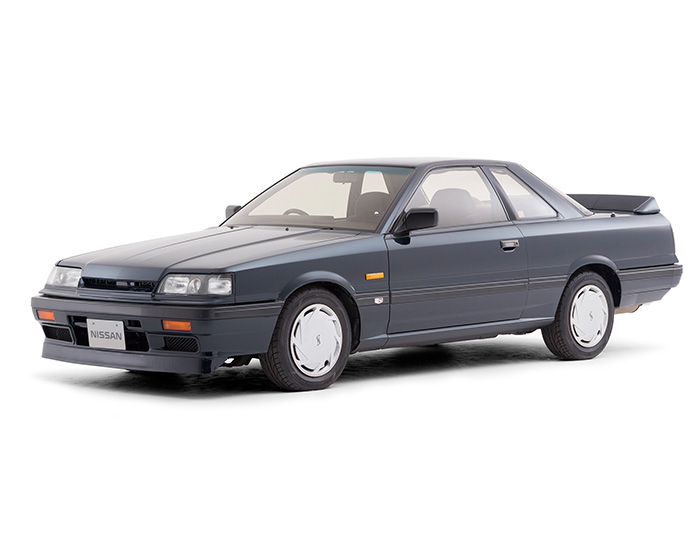
| A 1987 Nissan Skyline GTS-R in Navy Blue |
4. Nissan Skyline GTS-R (HR31)
This car gave us the return of the Inline-6 after they learned their lesson, with that said it is powered by a turbocharged RB20DET-R, a homologation spec engine producing 207 HP at 6,400 RPM and 245 Nm (181 lb-ft) at 4,800 RPM with a top speed of 250 km/h (155 mph), while it looks like the previous one, this model ditched the luxury features for aerodynamics featuring front spoiler chin and a rear spoiler plus some featured a Nissan's HICAS four-wheel steering (a predecessor to the iconic ATTESSA E-TS system) and it weighs around 1,345 kg (2965.2 lb)! The GTS-R is a homologation car built for Group A and managed squeeze out 823 units and the Group A version is the birth of the iconic Calsonic blue race car, they entered the racing scene in Japan Touring Car Championship in 1989 months before the arrival of the R32 GT-R (which we'll talk about this later) and won, over the other side- The Australian Touring Car Championship managed to end the Ford Sierra RS500 competitive streaks and won the 1990 ATCC title driven by Jim Richards! This car is rare and overshadowed; it deserves some attention. And now for our next car, it's the return of the GT-R-
|
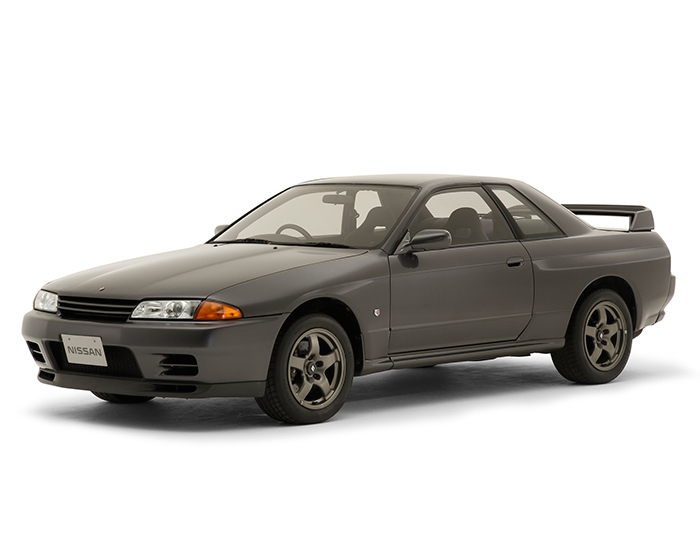
| A 1989 Nissan Skyline GT-R (BNR32) in Gun Metallic |
5. Nissan Skyline GT-R (BNR32) — The R32
Finally! The return of the GT-R after 16 years of hiatus, and this car is an engineering marvel! While the HR31 is busy racing, the engineers is observing something; The HR31 has a problem: traction loss, oversteer and low grip on wet surfaces makes the car suffer in racing and the 400+ HP Group A car is useless without grip so engineers in Nissan wanted to create a car that could dominate just like it's great grandfather, the "Hakosuka"… Engineers noticed the Porsche 959, one of the fastest cars in the late 80's, PSK AWD system fascinated them, the PSK or Porsche-Steuer Kupplung is a variable, electro-hydraulic controlled, multi-plates clutch system that uses the car's computer to deliver power to either front or rear depending on the surface, how you drive and more while you have the feel of a RWD, Nissan liked the idea of making the new GT-R advanced RWD and ordered one directly from Porsche but they said no but Nissan has a clever plan; first, they ordered the 959 Komfort (chassis #022) under an unnamed Belgian national, shipped it to Yokohama, Japan as their research mule. Nissan disassembled the car to understand the 959's PSK, and there Nissan created a simpler, less complex and cheaper of the PSK called the ATTESSA E-TS; the system allows the car to send power to the front wheels when a rear slip is detected, this also make the car almost 100% RWD if no front grip is needed unlike the variable AWD system of 959 and to make it simpler, the ATTESSA E-TS uses one single multi-plate wet clutch to do the work than the 959's 6 separate pairs of clutch plates that each of them can be controlled individually. Engineers finally gave the ATTESSA E-TS system to their GT-R, and now for the engine; the RB26DETT was a legend: cast-iron block, twin turbo, and tunability is what made it special. Tuners managed to tune it up to 2,500 HP, which is insane for a 2.6-liter engine! This engine is iconic of the early to late 90's Skylines, known for the kind of power they could unleash! The BNR32 was among the lightest at only 1,430 kg (3,153 lb). RB26DETT produced 276 HP at 6,800 RPM due to Japan's gentlemen's agreement, but they made it clever for someone who can unleash their power, torque at 353 Nm (260 lb-ft) at 4,400 RPM, and a top speed of 250 km/h (155 mph). One of the rare variants is the GT-R NISMO built for homologation; only 560 were made, and 60 of them are for the racing teams. The Group A is where they shine; In the JTCC, they won 29 races with no losses! Among them is an iconic Calsonic blue race car that took 15 wins out of 29, driven by the "Fastest Man in Japan," Kazuyoshi Hoshino. On the other side, the R32 won 12 races in ATCC from 1990 to 1992, and Aussies gave this machine a nickname "Godzilla" due to their dominance in their home game! Fun fact: It was so dominant that the Australian Racing authorities (CAMS) changed the rules and abandoned Group A entirely, switching to the V8 Supercars completely. Was the ATTESSA E-TS enough to be a cheat? It is what it is! The next car is kinda underrated-
|
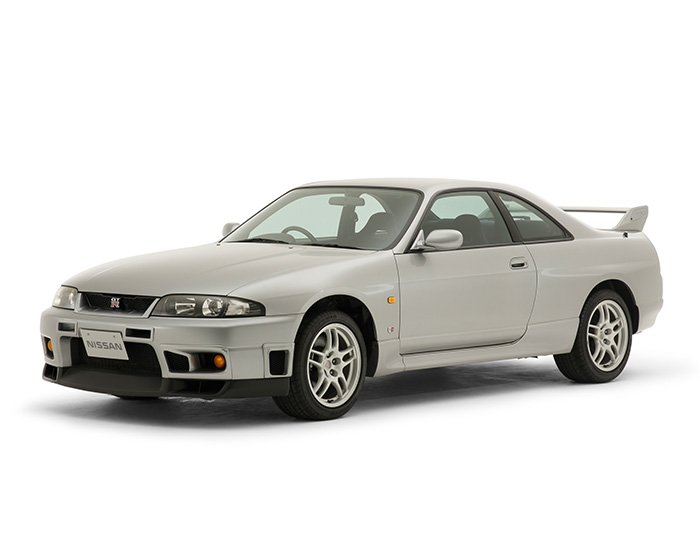
| A 1997 Nissan Skyline GT-R V-Spec (BCNR33) in silver |
6. Nissan Skyline GT-R (BCNR33) — The R33
The car received an unfair treatment- It was nicknamed the "boat" because it's heavy at 1,530+ kg, longer wheelbase and a wider body, the design was smoother and curvy than the R32's semi-boxy design, some say its "bloated" or "fat" but don't make the appearance fool you because this car is a refined Godzilla: they kept the same engine- The RB26DETT with some improvements like the turbos, intercooler and others, handling improved by upgrading larger brakes and revising suspension geometry, the design I mentioned is used to improve aerodynamics, ATTESA-ETS received a system tweaks for better traction and the ECU's processor is upgraded to 16-bit allowing to improve fuel & air mixture and timing. If you have the V-Spec, you will get an ATTESA-ETS Pro; this one has a rear active LSD that can adjust its locking force depending on the condition, a stiffer suspension, more aero tweaks, larger wheels, and more. The overall chassis of the R33 is stiffer and reinforced, resulting 150% greater torsional rigidity than the R32. This reduced flex improves handling precision, and not only that, it has better weight distribution despite being heavy. One of the holy grail of the R33 is the NISMO 400R, an ultra rare limited edition with a special RB-X GT2 engine installed making 395 HP at 6,800 RPM, torque at 470 Nm (347 lb-ft) at 4,400 RPM and a top speed of 300 Km/h (186 mph), so many upgrades are fitted like forged pistons, N1-Spec Turbos, Larger exhausts and more, they built only 44 units making it one of the most sought after R33 GT-R. The R33 entered the scene in 1995 in the JGTC 500, and Masahiko Kageyama won the Driver's Championship in an iconic blue Calsonic R33. Kazuyoshi Hoshino's #12 Calsonic R33 managed to secure several victories against the Supras, especially TOM's. This is where the Skyline vs. Supra rivalry was born. Nissan wanted to prove even further by participating in the 24 Hours of Le Mans with their two R33 LMs in 1995, and the result? #22 won 10th overall and 5th in its class, this is good news for a car based on a production chassis, but in 1996? The competition is fierce and advanced like the Porsche 911 GT1, too advanced that the R33 fell on the 15th; however, back in Japan? The car is undefeated in the N1 endurance series thanks to the technologies embedded in the R33. Overall, the middle child deserves some love and recognition other than being a "boat". The next car is the legend, the GOAT-
|
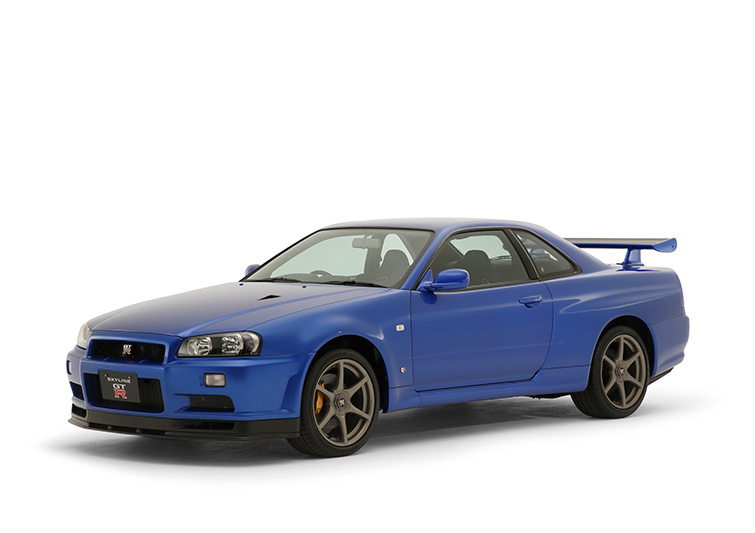
| A 2000 Nissan Skyline GT-R V-Spec II (BNR34) in Bayside Blue |
7. Nissan Skyline GT-R (BNR34) — The R34
The GOAT! The legendary! R34 Skyline GT-R, this car is an icon that has appeared in video games, movies, and on social media! The car improved over the previous generation: shorter wheelbase, better aerodynamics, and the best of all, its aggressive, angular, and mildly boxy! The car carries the same RB26DETT producing 276 HP at 6,800 RPM under a gentleman's agreement and a torque of 392 Nm (289 lb-ft) at 4,400 RPM and weighs 1,540+ kg (3,395 lb). The car still received ATTESSA E-TS for the base model and ATTESSA E-TS Pro for V-Spec and high trims, but they're refined for better handling. The big upgrades were the Multi-Function Display (MFD) in the dashboard, a tech that shows all the information of the car for the driver, like a real-time boost meter, oil & water temp, lap times, G-force meter, and more, very revolutionary in the late 90's, and a 6-speed manual transmission, a big upgrade from previous GT-Rs. There are three versions I want to talk about: the M-Spec, V-Spec II Nur, and NISMO Z-Tune; if you want luxurious driving but want aggressive performance. Get the M-Spec, which features a softer suspension for a comfortable ride and leather interiors. If you want more serious power, the M-Spec Nur has you covered. The V-Spec II Nur gave us the refined power, featuring N1-spec parts embedded inside, carbon fibers, and more. This commemorates the R34's Nurburgring performance, which lapped at 7:52 minutes. The holiest grail of all- The NISMO Z-Tune, built rebirth to the legendary Skyline name; it has a stroked 2.8-liter RB26DETT making nearly 500 HP with a wider body kit, carbon fibers everywhere, upgraded suspension, brakes, and differentials. The NISMO Z-Tune is insanely expensive and very rare among the Skyline GT-R family, built only 19–20 Z-Tunes using returned R34s. R34 entered the scene in 1999, and the R34 proved to be a consistent dominance in terms of reliability. #12 R34 Calsonic, driven by Hoshino and Kageyama, has a teething issue and strong competition against Supras and NSXs, both of which are beasts, which led them to win at 7th in driver's standing. In the 2000 season, the R34 Calsonic won after a winless streak at Mine Circuit since 1996! In 2002, Hoshino bid farewell as he secured his last win in 2002 in Circuit Aida, retiring from his glorious racing days. In 2003 is their last race; they ditched the RB26DETT and ATTESSA ET-S for a VQ30DETT, same engine from the Z33 Fairlady Z, and rear wheel drive, focused on weight reduction and balance, weighing only 1,050 kg (2315 lb), the #12 R34 Calsonic managed to win at the July round of Fuji Speedway and the season-finale at Suzuka in a dramatic way. The V6 R34 was controversial among purists but managed to win drivers' and Teams' titles before retiring the R34. The N1/endurance series is where they dominate. The R34 chassis is so stiff that it's untouchable during the Super Taikyu series. At the 2002 Nurburgring 24 Hours, they finished 5th overall and competed against GT3-spec cars from Porsche and BMW by Falken. The car received a cult following due to Fast & Furious and Gran Turismo. This car defined the JDM culture and is an icon of the holy grail of JDM cars. The next car is the rebirth of the GT-R, and often the controversial-
|
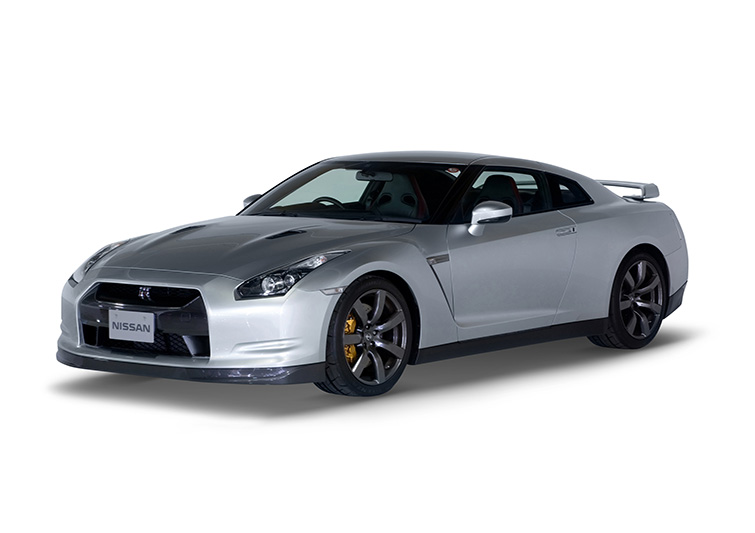
| A 2007 Nissan GT-R in Silver |
8. Nissan GT-R (R35)
The final form of the GT-R emerged in 2007 as part of Nissan's Revival Plan, finally bringing the GT-R to everyone, including the US. The GT-R dropped the Skyline name for three letters- G T R, and it became a separate product; the Skyline continued as a sedan for everyone (and a coupe), while the GT-R is a successor of the Skyline GT-R. The key is to create a monster, Japan's another supercar, and to embarrass the exotics, both speed and turns. The result is the Nissan GT-R, under the hood is a VR38DETT, twin turbocharged V6 producing 473 HP at 6,400 RPM, finally unleashing the chains after the gentlemen's agreement, with a torque of 588 Nm (434 lb-ft) at around 3,200–5,200 RPM and a top speed of 310 Km/h (193 mph). The engine is hand-built to make sure precision is key to making a perfect supercar under a master technician called "Takumi". The car received huge upgrades: ATTESSA E-TS Pro, but with a twist! They used the first-ever Independent Rear Transaxle 4WD; The system achieved a perfect weight distribution because the engine is in the front and trannies in the back, using two driveshafts. One carries power from the engine to the rear-mounted transmission, and the second carries power from that transmission back up to the front wheels. They were also the first ones to feature a launch control and a 6-Speed dual clutch transmission. A Bilstein DampTronic active suspension, which you can select from drive modes between Comfort, Normal, or Racing. This is helpful for your preference, whether you're cruising or racing on the track. With all of these techs, it weighs heavily at 1,740 kg (3,836 lb), but it's still as fast as hell. The real output of the V6 is often around 500–550 HP, and the torque is massive enough to move a nearly 2-ton car! Another one is its ATTESSA E-TS Pro, like I said, it remained RWD until sensors detect any anomalies while driving, sending some power to the front wheels, and its rear transaxle layout makes a near 50:50 weight distribution and a lightning fast 6-Speed Transmission with around 0.2 seconds or less without interruptions. Overall, the car lapped in the Nurburgring at 7:38 minutes, beating the Porsche 911 Turbo and other exotics. The car continued to be refined throughout its 18-year production. The NISMO variants were among the fan-favorite track weapons; The 2019–2025 GT-R NISMO produced nearly 600 HP at 6,800 RPM and torque at a massive 652 Nm (481 lb-ft) at around 3,600–5,800 RPM, ATTESSA E-TS Pro with active rear LSD (optional front LSD via packages), NISMO-tuned suspensions, and carbon ceramic brakes. The aerodynamic kits in the NISMO GT-Rs are aggressive to achieve downforce and high-speed stability. The weight can be either lighter or heavier than the normal GT-R, depending on the year or options. This variant lapped the Nurburgring at 7:08 minutes, while newer NISMO models achieve seconds faster. The GT-R debuted in the racing scene in 2008 in the GT500 Class using a V8 engine, and soon, the Inline 4 engine in 2014, and over the years from 2008 to 2021, it achieved 41 race wins, dominating the race track in the Super GT GT500 series, which revived the "Godzilla" nickname immediately since its first victory. In the GT300 series, they won 3 championship doubles in 2015, 2020, and 2023 using their GT-R NISMO GT3. Outside the GT300 series, The GT-R NISMO GT3 has been racing for everyone. It featured a tuned VR38DETT engine producing around 550–600+ HP, a race spec ATTESSA E-TS system, and a robust chassis. The car excelled in the international racing scene: At the 2015 Bathurst 12 Hour, they won an overall victory that echoes the R32's dominance in that same track since the early 90's. In the 2015 Blancpain Endurance Europe, they secured the overall PRO Class Championship. This is widely considered the most competitive GT3 series in the world, and beating the Ferraris, Lamborghinis, and Porsches on their home turf was a huge statement. In the grueling endurance of the Nurburgring 24 Hours, it secured some class wins like SP8T in 2011–2012. The GT-R NISMO GT3 was a popular customer car for teams like RJN Motorsport, JR Motorsport, and Sumo Power because this car is reliable, fast, and advanced, making it dominant on the race track.
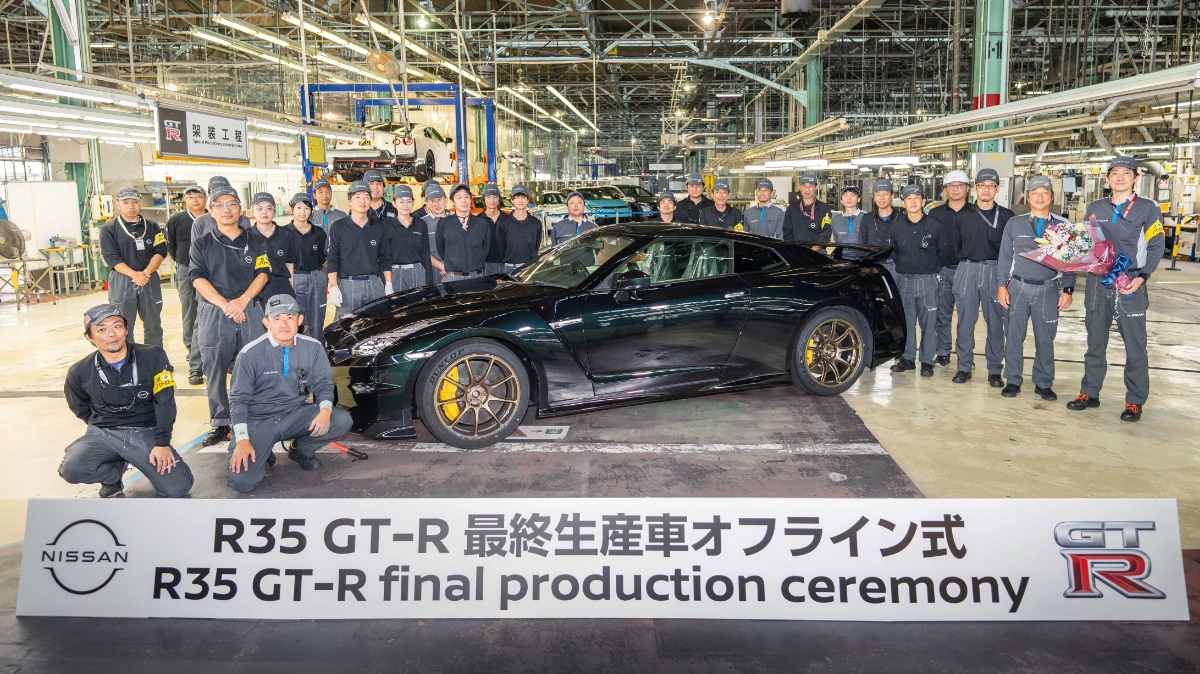
|
| The final GT-R made - A Midnight Purple GT-R Premium Edition T-Spec |
The GT-R ended its production on August 28, 2025, at the Tochigi Plant in Japan, their last unit was a special Midnight Purple Premium Edition T-Spec that rolled off the assembly line. The GT-R and it's predecessors- The Skyline GT-R was Nissan's most advanced car ever created, from its dominant Skyline GT-R C10 that terrorized the race track all the way from a supercar killer in three letters- GT-R. We don't know what the next GT-R would look like; some say it would have a hybrid setup that would push more horsepower on the V6. We don't know… Here's a spec sheet of every GT-R generation for you to compare:
| Generation | Engine | Power | Weight | Years |
|---|---|---|---|---|
| C10 (Hakosuka) | S20 I6 | 160 HP | 1,100 kg | 1969–1972 |
| KPGC110 (Kenmeri) | S20 I6 | 160 HP | 1,145 kg | 1973 |
| DR30 RS Turbo | FJ20ET I4 | 188 HP | 1,150 kg | 1981–1985 |
| HR31 GTS-R | RB20DET-R I6 | 207 HP | 1,345 kg | 1987–1989 |
| BNR32 | RB26DETT I6 | 276 HP | 1,430 kg | 1989–1994 |
| BCNR33 | RB26DETT I6 | 276 HP | 1,530 kg | 1995–1998 |
| BNR34 | RB26DETT I6 | 276 HP | 1,540 kg | 1999–2002 |
| R35 GT-R | VR38DETT V6 | 473 HP | 1,740 kg | 2007–2025 |
Thank you so much for tuning in. I'll see you guys in my next blog. I love you guys


Comments
Post a Comment