Toyota Fortuner Review: Why Southeast Asia's Favorite SUV Has an Identity Crisis
It's the mid-size SUV that every middle to rich family in South East Asia has one, it is notorious for being entitled on the street, a king on the road perhaps, and has made one of the best-selling mid-size SUVs ever! Today, we're going to talk about how the Toyota Fortuner became iconic on the streets of Southeast Asia and how it started.
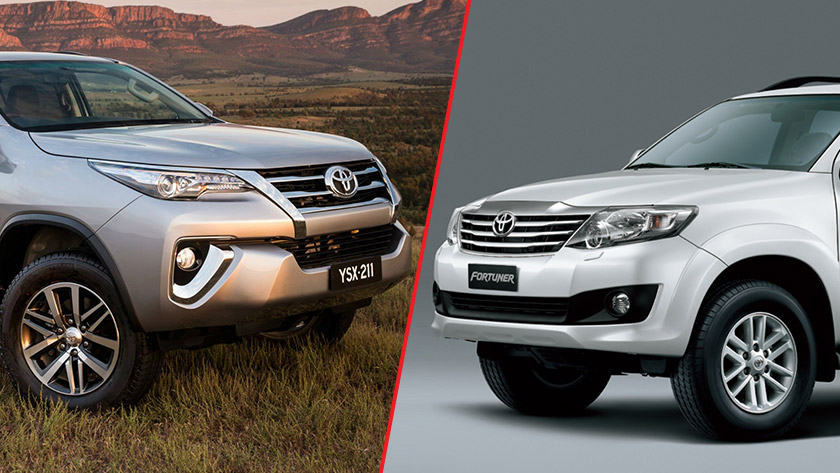
|
| 1st Gen Fortuner vs. 2nd Gen Fortuner |
How Thailand Created the Mid-Size SUV Market
First of all, let's talk about the OG that started it all, back in the 90s, most of the mid-size and full-size SUVs were imported and expensive. If you own a Ford Explorer, the Toyota Land Cruiser Prado, the full-size SUV, then congratulations! You made it! And it is considered a status symbol for the road meanwhile others are in their AUVs like the Toyota Tamaraw FX (Kijang), Isuzu Hi-Lander (Panther) and the Mitsubishi Adventure (Freeca), they're like SUVs but compact and cheap and that's when Thailand steps in, you see, Thailand is known as "Detroit of Asia", they're known for building pickup trucks to be exported around the world, pickups like the Toyota Hilux, Isuzu Faster, Mitsubishi L200, Nissan Frontier and others were made there. They made a market share of 50% of the global sales, now Thailand noticed the SUV boom around the world but Thailand taxed foreign mid-size to full-size SUVs to protect the local automotive factories, so they came up a solution; in 2003, they unveiled the Ford Everest, this changed everything for Thailand, the Ford Everest was based on the 2002 Ford Ranger, it has the same engine as the Ranger— The 2.5 Duratorq Turbo-Diesel Engine and later the 3.0 Duratorq. The idea of a pickup-based SUV worked and sold around 200,000 to 300,000 units across Asia-Pacific. It came afterwards in 2004, Isuzu Alterra, which sold pretty well too, but Toyota made a move on the growing mid-size SUV game.

|
| Ford Everest; Mid-Size SUV gets it right |
1st Generation Toyota Fortuner (2005–2015): Born from the IMV Platform
Toyota unveiled the IMV platform back in 2002, which enabled Toyota Indonesia and Thailand to create new vehicles under the IMV platform. The IMV platform stood for "Innovative International Multi-Purpose Vehicle," which is a body-on-frame chassis on which our Toyota Innova and the Toyota Hilux are based. After the 7th Gen Toyota Hilux was unveiled in 2004, the next year came the 1st Gen Toyota Fortuner. The Fortuner is either powered by a 2.7 2TR-FE petrol engine making 118 HP at 5,200 RPM and a torque of 241 Nm (178 lb-ft) or the legendary 1KD-FTV D-4D turbo-diesel engine that was shared by Toyota Innova, Hilux, and the HiAce, making 163 HP at 3,400 RPM and a torque of 343 Nm (253 lb-ft) at 1,600–3,200 RPM which is powerful and smoother. Meanwhile, in the Middle East, they used a 1GR-FE V6 making 237 HP at 5,200 RPM and a torque of 376 Nm (277 lb-ft), which is, surprisingly, more refined, powerful, and smoother than the 1KD-FTV, and it's offered in 4x4, meaning it's a pocket-sized off-roader. The Fortuner sits between a RAV4 and the Land Cruiser Prado so it has size of a Land Cruiser Prado and a practicality of the RAV4 which you can notice on its compartment size at back, you see, the 1st gen Ford Everest has a length of 4,970 mm which longer than the Fortuner that has a length of 4,705 mm and the reason is that they want a family-focused SUV that has crossover-shape, car-like personality traits but has the vibe of the Land Cruiser, that's why third row seats are optional to use because it would eat up the cargo area (Though the seats are in the way too when closed up) so they're act as crossovers, the interiors are nothing special but leather and plush seats. Toyota wants to market the Fortuner as a prestige mid-size SUV that has the prestige of a Prado but rugged and capable, but has car-like traits, while the Ford Everest wants you to feel like you're driving an Explorer— Comfortable and soft. The 1st gen Fortuner was a big success when it hit sales across the globe. It sold 1 million of these from 2005 to 2015, even though it is a bit more expensive than the Ford Everest and has proper cargo space and decent third-row seats.

|
| 1st Gen Fortuner with a V6 |
2nd Generation Toyota Fortuner (2015–Present): The Status Symbol Gets Sharper
The 2nd gen Fortuner unveiled in 2015 brought the whole new level; its design didn't share resemblance with the 8th gen Hilux, meaning they designed the new Fortuner with a new, distinct design. The design looks sharp and intimidating as it is based on the Land Cruiser and the Prado to make it more prestigious. The Fortuner is still under the IMV platform, which is shared by the 2nd-gen Innova and the 8th-gen Hilux. It received a new engine: The 2.4 2GD-FTV, making 150 HP at 3,400 RPM and a torque of 400 Nm at 1,600–2,000 RPM for the low trim levels and 2.8 1GD-FTV making a whopping 177 HP at 3,400 RPM and a torque of 430 Nm at 1,600–2,800 RPM for the higher trim levels, but the petrol version— The 2TR-FE making 164 HP at 5,200 RPM and a torque of 249 Nm (181 lb-ft) at 4,000 RPM, on the streets of the Philippines are rare due to gasoline price, but in the Middle East, again. They still offer a tuned 1GR-FE V6 engine. The 2nd-gen Fortuner is a bit longer at 4,795 mm but has a nearly identical wheelbase as the 1st gen. The interiors improved from the 1st gen: good ergonomics and more legroom, but don't expect the third row seats, as they're seen as optional use. They added techs like ABS, Apple CarPlay, Toyota Safety Sense, EBD, a "Follow Me Home" lights feature, automatic AC, and so much more that our analog 1st-gen Fortuner lacked. The facelift makes it even sharper and intimidating with the daytime running lights, more features, and a JBL sound system. The GR-S Fortuner became a statement, a premium status, and weird because most of these are pavement queens and never touched off-road despite being marketed as an off-road capable mid-size SUV. Honestly, most GR-S are mostly riced-up vehicles for status.

|
| 2nd Gen Toyota Fortuner GR-S, a sporty SUV that never touched mud |
Why the Fortuner Became Southeast Asia's Status Symbol
Today in 2026, the Toyota Fortuner stood one of the best selling mid-size SUV ever since its release and that's the reason why we have the Mitsubishi Montero Sport in 2008 as the answer to the growth of the Asia-Pacific mid-size SUVs, the 2nd gen Everest got redesign based on the 3rd gen Ranger, the Isuzu dropped the Alterra in favor for the MU-X, Chevy joined the game with their 2nd gen Trailblazer and Nissan joined too late with their Terra. The Toyota Fortuner is one of the iconic SUVs that came out in Thailand as a solution to the growing SUV market in Southeast Asia and the Asia Pacific. These crossover-like mid-size SUVs ran into an identity crisis; Built on a truck. Sold as a family SUV. Used as a crossover. Bought for Status. The Fortuner is built to intimidate, bully, and to show power on the road, which is why Fortuner stereotypes are born; black paint, tinted, often raised and modified everything. Compare that to the SUV coupes of BMW and Mercedes-Benz, and you know what I'm talking about. Overall, the Toyota Fortuner is the iPhone of mid-size SUVs in Southeast Asia and Pacific Asia. Whether you don't like who's behind the wheel or admire them for their success, the Toyota Fortuner is always a mid-size SUV for the masses. Thank you so much for tuning in, Pi of Mann out…


Comments
Post a Comment