10 Famous Engines Found in the Most Unexpected Cars
The engine is the heart of every automobile — you can't drive a car without an engine to power everything. Sometimes engineers go wild with horsepower, while others borrow an engine from an unexpected source and give it a tune that unleashes its potential; however, not all use it for performance. Some end up using the same engine in an "ordinary" vehicle! Today, we're going to list famous engines that can be found in the most unexpected vehicles. Let's go!
1. Toyota 2GR-FE in a Lotus Evora
|
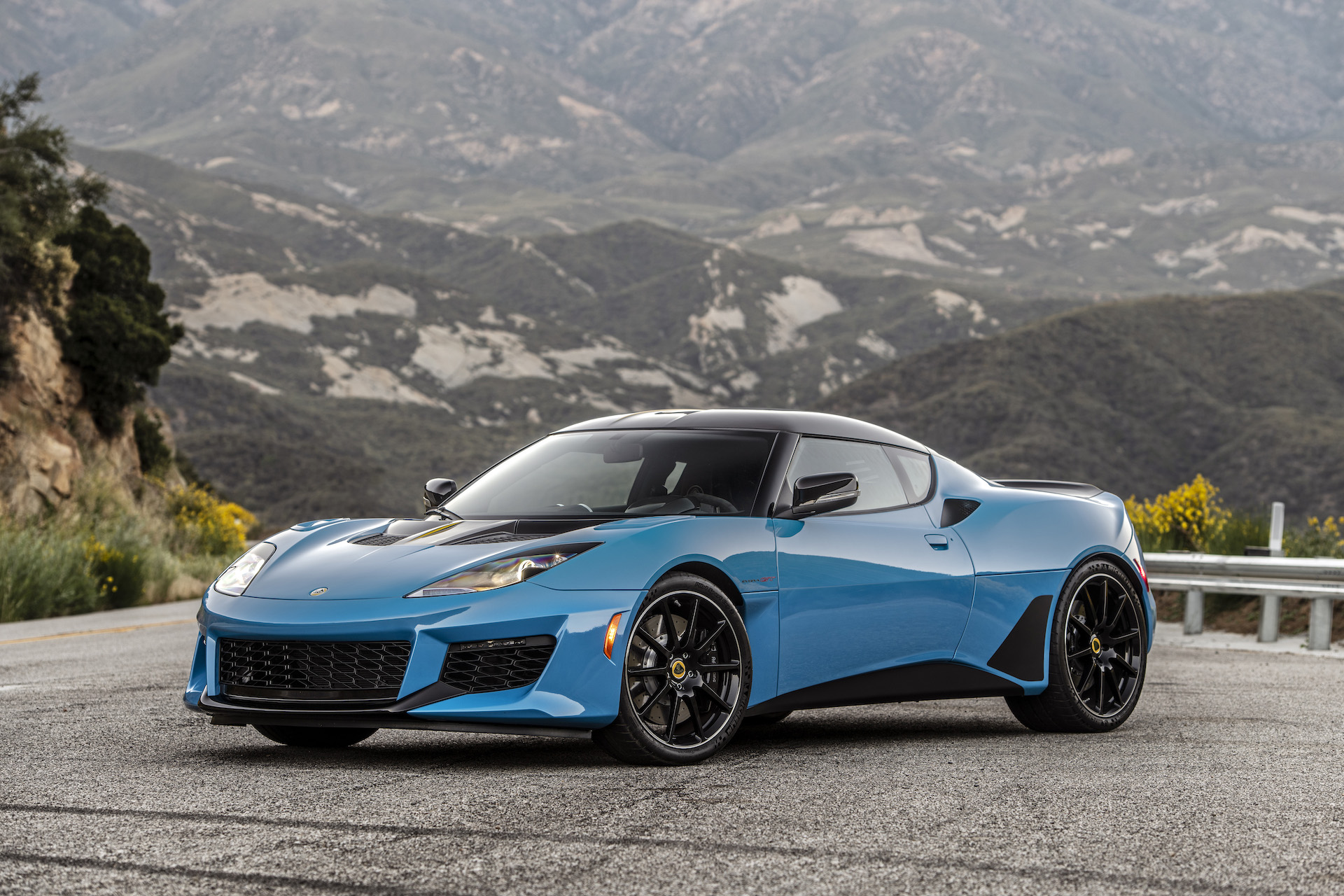
| Lotus Evora — with a V6 from Toyota |
Lotus and Toyota have been friends since the introduction of the Series 2 Elise and Exige; Toyota has been supplying engines to Lotus since the mid-2000s. The 2GR-FE V6 is the same engine found in the Camry (GSV40–50), RAV4 (GSA33/38), Previa (GSR50/55), and the Alphard (GGH20/25–30/35) — essentially a people-mover engine sitting in a lightweight British sports car. The top-spec GT430 has the same engine tuned to 430 hp with a supercharger, and the whole car weighs just 1,283 kg (2,773 lb). The Evora was produced from 2009 to 2021, and when Lotus replaced it with the Emira? Still using the 2GR-FE V6. Some things never change. The fact that a family SUV engine can power both a minivan and a 430 hp supercharged sports car says everything about how overengineered that Toyota V6 really is.
2. Ford 351W (Windsor) in a De Tomaso Pantera
|
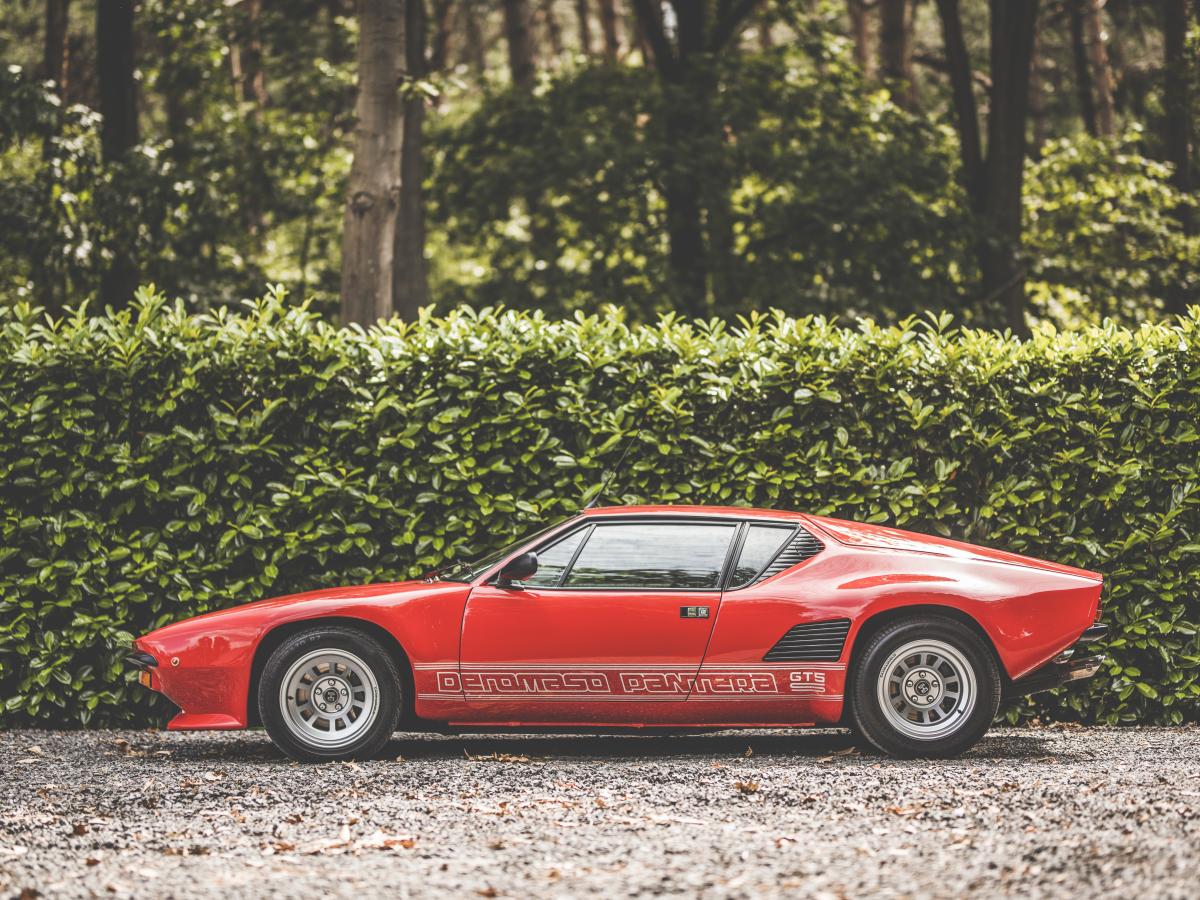
| 1988 De Tomaso Pantera GT5-S |
Some Panteras used the Ford 351 Cleveland engine until supplies ran out, so De Tomaso switched to the 351 Windsor instead. The Pantera is among the most underrated sports cars ever made — it ran from 1971 to 1992, a 21-year production run. The Windsor-powered Pantera shares its engine with the 7th-gen Ford F-150, and the 302 version (Pantera Si) uses what was effectively a Mustang engine. The GT5-S Windsor-powered produced around 300–350 hp stock, with some modified to 400+, a top speed of 174 mph (280 km/h), and 0–60 in 5.2–5.5 seconds. Not bad for a mid-engine Italian sports car powered by a truck engine. The Pantera's genius was exactly this — De Tomaso knew Ford V8s were cheap, plentiful, and easy to service anywhere in America, making the car far more practical than exotic Italian alternatives.
3. 13B Rotary in a Mazda Parkway 26
|
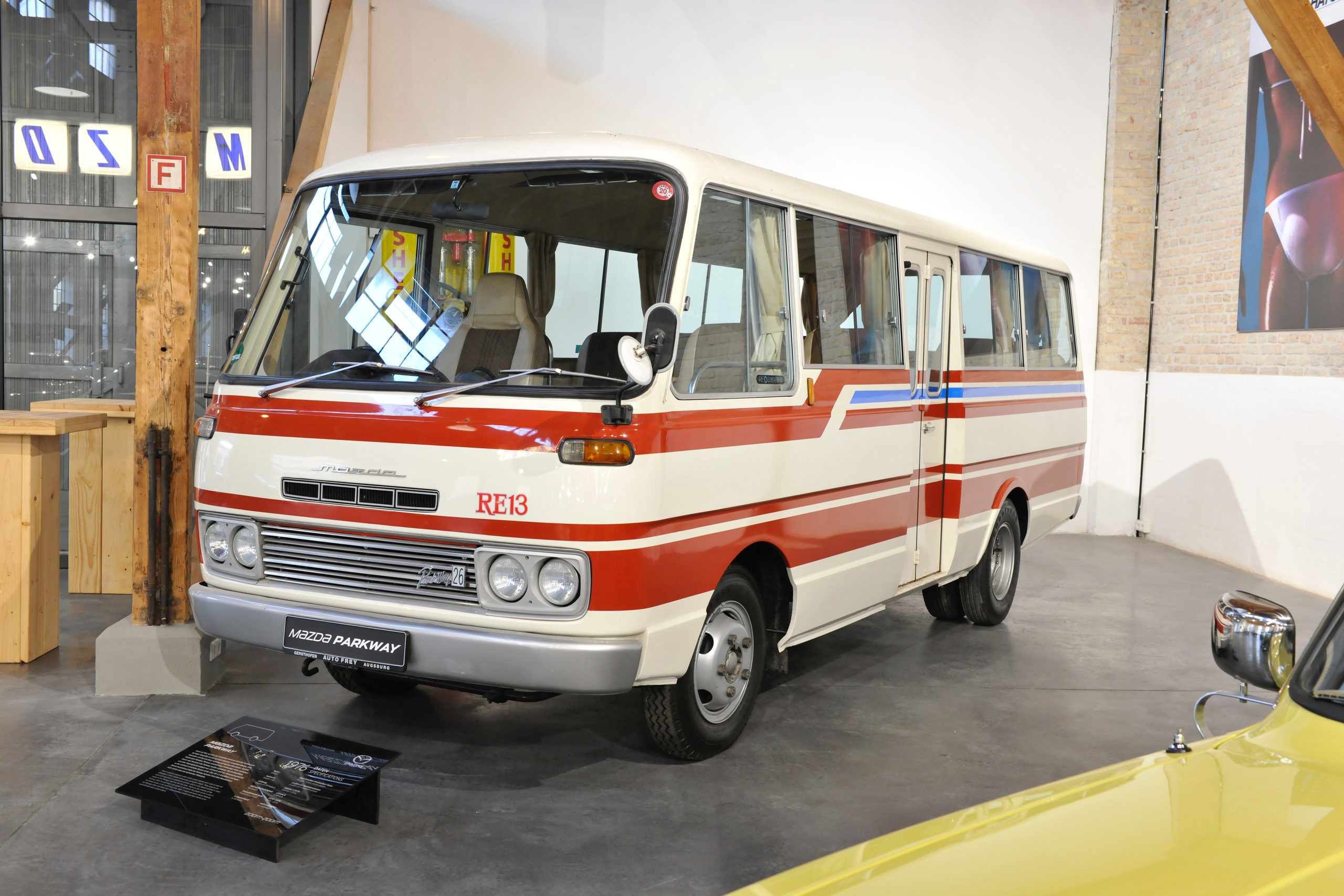
| Mazda Parkway 26 — rotary engine inside a bus |
13B in a minibus — yes, you heard right. The same engine found in the Cosmo, the Roadpacer, and most famously the RX-7 as the 13B-REW ended up powering a 26-passenger bus. Mazda was on a mission to prove that rotary was the future of all transportation — not just sports cars. The Parkway produced 135 hp with a torque of 179 Nm (132 lb-ft) at 4,000 RPM, hauling a whopping 2,835 kg (6,250 lb) to a top speed of 120 km/h (75 mph). The real problem with this setup is the rotary engine's torque curve — the 13B makes its power high in the RPM range, which is the complete opposite of what a stop-start city bus needs. Every time the driver had to pull away from a bus stop, the engine was working against its own nature. It's a fascinating experiment that proved why rotary engines belong in sports cars, not public transport.
4. 4G63 in a Mitsubishi Fuso Canter GUTS
|
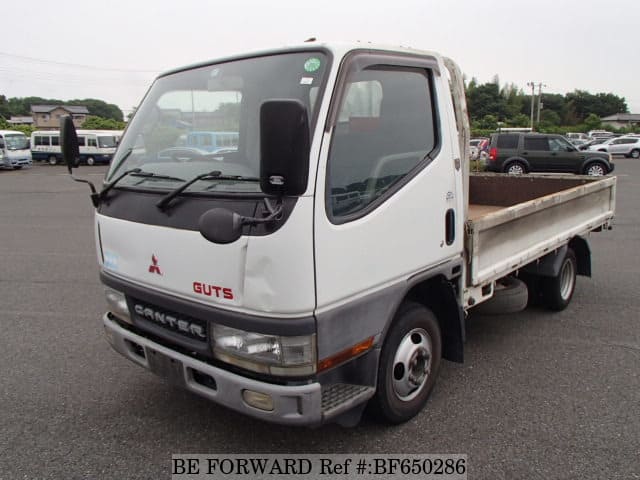
| Mitsubishi Fuso Canter GUTS — with a 4G63 under the hood |
This 1.5-ton light truck uses a 4G63 — the same block family as the Lancer Evolution. The Evo version has a turbo and full DOHC setup making 280+ hp, while the Canter's version is naturally aspirated and detuned for torque and longevity — 99 hp with 155–165 Nm (114–122 lb-ft). But here's what makes it interesting: both share the same cast-iron block construction, which is why the 4G63 became legendary for its tunability in the first place. The iron block can take abuse. Parts are abundant after 40+ years of production across both trucks and performance cars, making this one of the most supported engines in Asia. It's a case where the same DNA that made an Evo terrifying on a rally stage also made a delivery truck run for 300,000 km without complaint.
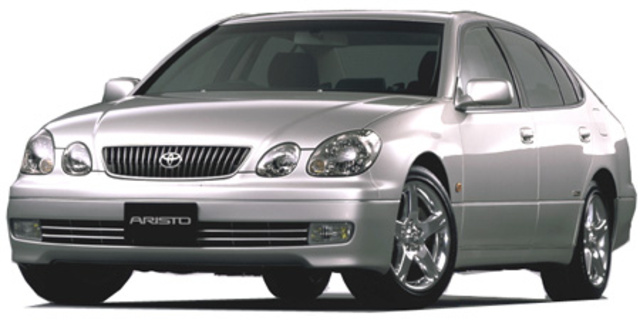
5. 2JZ-GTE in a Toyota Aristo V300
|
| Toyota Aristo V300 — Supra engine in a business sedan |
The 2JZ-GTE belongs to the Supra — we all know that — but what happens when you drop it into an executive sedan meant for business people? That's exactly what Toyota did with the Aristo V300. It produces the same 276 hp as the Supra (due to the Japanese gentlemen's agreement), but weighs more at 1,680 kg (3,704 lb). The Lexus GS 300 version uses the naturally aspirated 2JZ-GE making 225 hp — the same engine as the NA Supra. The Aristo became a cult favourite in the JDM tuner scene precisely because of this: a luxury sedan with a twin-turbo inline-six that tuners could push well past 500 hp while it looked like a company car in a parking lot. Toyota accidentally built one of the greatest sleeper cars ever made.
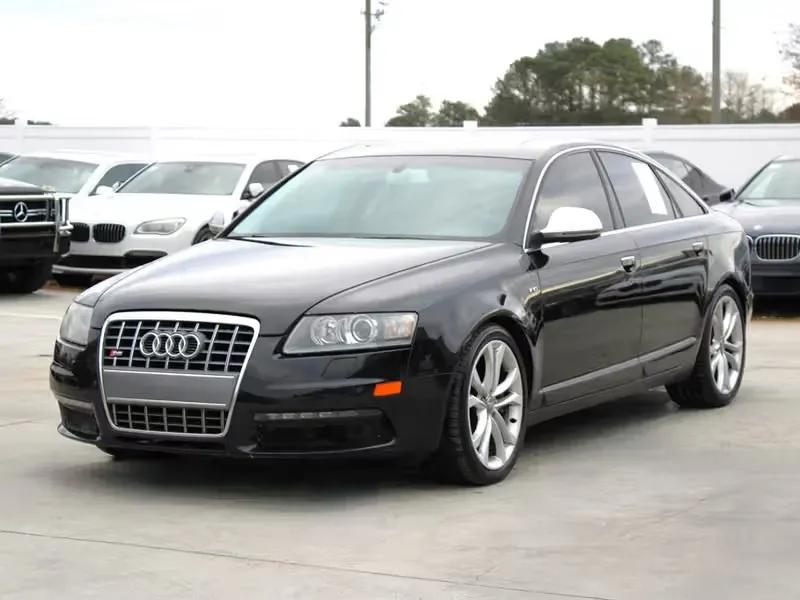
6. Lamborghini V10 in an Audi S6 (C6)
|
| Audi S6 C6 — a V10 sedan hiding in plain sight |
I don't know what the Germans were smoking — a V10 in a business sedan. The same engine architecture found in the Lamborghini Gallardo and the Audi R8 somehow ended up in an executive car that looks completely normal in a company car park. It produces 435 hp with a top speed of 155 mph (250 km/h) and 0–60 at 5.1–5.2 seconds. The key difference is that the Audi S6 uses a 5.2L version bored out from the Gallardo's 5.0L, tuned for low-end torque and highway cruising rather than the Gallardo's screaming high-RPM character. The result is a car that will silently embarrass sports cars on the motorway while its owner sits in leather comfort. The VAG group's parts-sharing strategy at its most gloriously absurd.
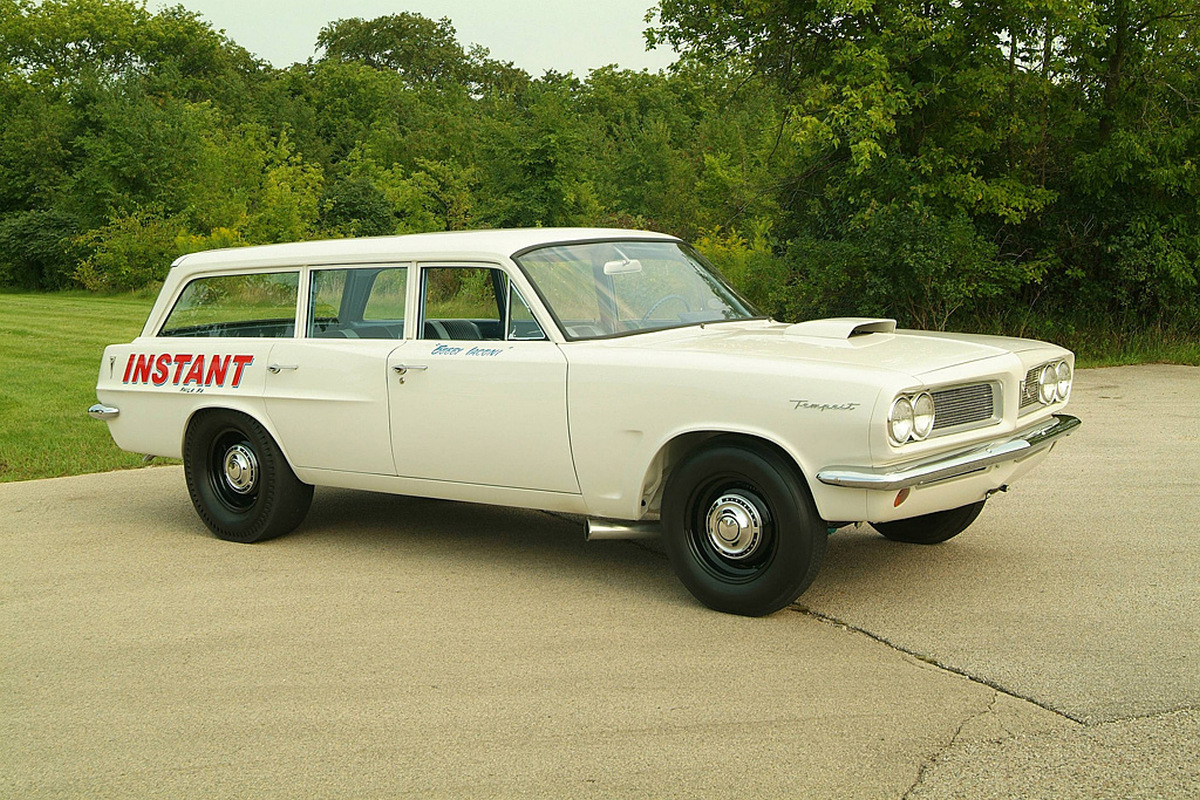
7. 421 Super Duty V8 in a Pontiac Tempest Super Duty Wagon
|
| 1963 Pontiac Tempest Super Duty — factory drag wagon |
This one is officially factory-built — the Super Duty wagon was purpose-built to dominate the NHRA experimental class in drag racing. The 421 Super Duty V8 was found in performance Pontiacs like the Grand Prix and Catalina, but Pontiac decided a station wagon was a perfectly reasonable home for it too. It makes 405 hp with a top speed of 262 km/h (163 mph) — insane for a family wagon. It featured a unique "Powershift" transmission, a 4-speed transaxle consisting of two 2-speed automatics joined together, allowing rapid clutchless shifts under full power. Before the Audi RS6 Avant became the benchmark for fast wagons, Pontiac was doing it in 1963. Only a handful were ever built, making it one of the rarest factory drag cars in American history.
8. Volvo B8444S (by Yamaha) in a Noble M600

|
| Noble M600 — British design, Swedish engine, Japanese engineering |
This British supercar hides layers of surprises in its engine bay. The engine? It's from Volvo — the B8444S V8, found in the XC90 and S80. But the Volvo V8 has its own secret: it was actually designed and engineered by Yamaha, making this a British supercar running a Swedish engine built by a Japanese company. Yamaha has a long history of developing engines for other manufacturers — they also built the Ford SHO V6 and V8 — so the connection runs deeper than it looks. Noble took that Volvo-Yamaha V8, fitted twin turbos, and tuned it to 650 hp for supercar use. The result: 362 km/h (225 mph) top speed and 0–60 in 3.0 seconds. A car with no traction control, no ABS, no stability systems — just 650 hp, a manual gearbox, and whatever skill you have. The M600 is arguably the last truly raw supercar ever built.
9. Mazda MZR-R in a Lola B08/80 LMP2

|
| Lola B08/80 — a Le Mans prototype hiding a Mazda family car engine |
Lola built the chassis and sourced the engine elsewhere — and somehow an ordinary Mazda production engine ended up in an LMP2 Le Mans prototype. The MZR L-series engine is the same unit found in the Mazda6, Mazdaspeed3, Ford Mondeo, and the Ford Focus ST. AER (Advanced Engine Research) took that production engine, developed it into the MZR-R spec, and tuned it to approximately 500 hp for endurance racing use. The Lola B08/80 was also notable as Lola's first closed-cockpit prototype since 1992 — and it was powered by what is essentially a family saloon engine. It competed at Silverstone and other endurance rounds, proving that a well-developed road car engine can genuinely hold its own at the highest levels of prototype racing.
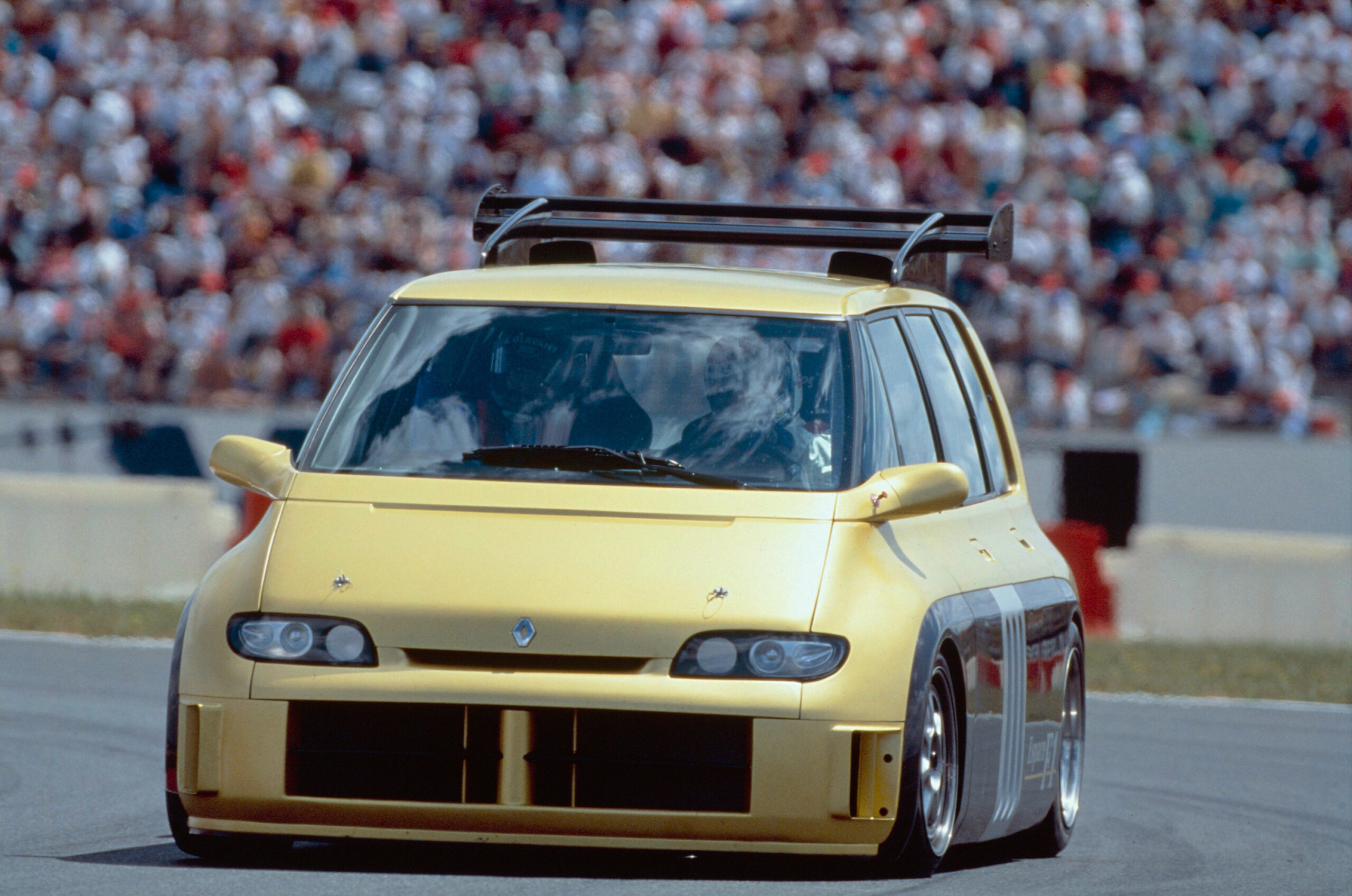
10. Renault RS26 V10 F1 Engine in the Renault Espace F1
|
| Renault Espace F1 — the greatest minivan ever built |
We won't end this list without the GOAT. Meet the Espace F1. To celebrate the 10th anniversary of the Espace minivan and Renault's championship partnership with Williams F1, Renault engineers apparently decided the most logical thing to do was stuff a Formula 1 V10 into a family minivan — and nobody stopped them. The RS26 V10 produces 789–800 hp at 13,000–13,800 RPM, reportedly more powerful than the actual F1 car it came from due to fewer restrictions on tuning. It's mid-engined like an F1 car, has 4 seats, and can hit 0–60 in under 2.8 seconds. This bizarre creation became iconic thanks to Gran Turismo and the internet, which is exactly where it belongs — a machine so absurd it could only exist as a one-off show car. But what a show car. The greatest vehicle ever to have a sliding door.
Conclusion
In the end, these engines prove that great engineering doesn't care about the badge on the car it lives in. From a family SUV engine powering a British sports car to a Formula 1 V10 haunting a minivan, engineers have always found ways to make the impossible work — sometimes for performance, sometimes for practicality, and sometimes just because nobody told them they couldn't. The best engines have a life beyond their original home, and that's exactly what makes them legendary.
Thank you so much for reading, I'll see you in my next blog!


Comments
Post a Comment