Japan's Used Car Problem: Why the World is Drowning in JDM Exports
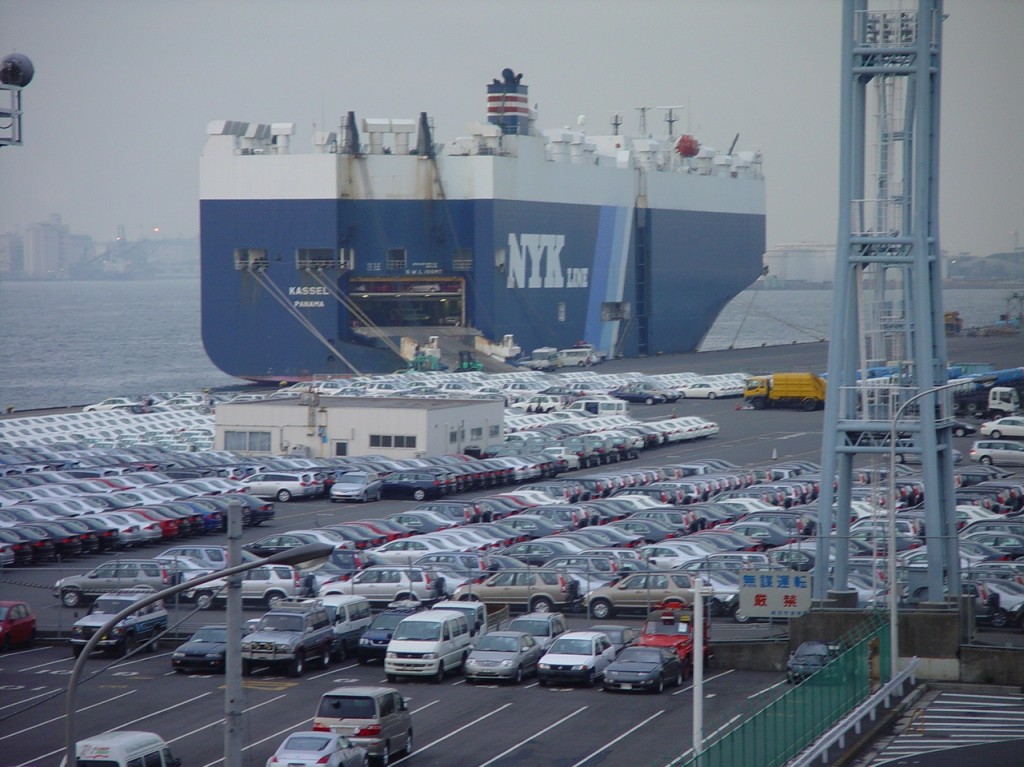
Japan has a growing number of used car exports that have become a global phenomenon. In 2024, Japan's used car exports reached a record high of 1,573,479 units — a 2% increase from 1,543,364 units in 2023 — going to destinations across Russia, the Middle East, Africa, Asia, and Oceania. And over the Philippines? There's an overwhelming number of surplus trucks from Japan. So why is Japan known for sending its cars around the world? How did the Japanese end up cycling through vehicles so quickly? Today, we'll be diving into Japan's used car problem and why it might be hurting the environment.
|
| Used cars waiting to be shipped |
Japan's Car Boom
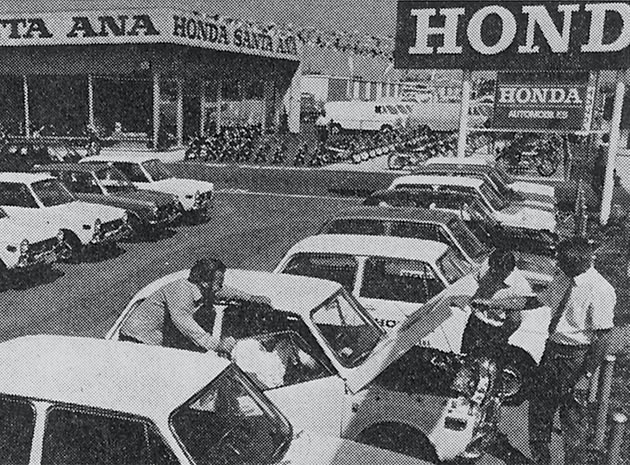
During the 1950s, Japan's economy was rapidly growing thanks to US support and the Korean War, which helped Japan rebuild after losing World War II. The 1960s saw a booming rise in domestic vehicle ownership as Japan's economy kept climbing and ordinary Japanese workers earned enough to buy new cars. Affordable kei cars were introduced as low-taxed vehicles under 360cc, making them popular among buyers who wanted practical transportation. Then came the 1970s oil crisis — Japan rapidly produced fuel-efficient cars for the global market, which helped it surpass both West Germany and the United States in manufacturing scale. These factors established Japan as a global leader in automotive production and pushed its factories into other countries. But while these numbers are impressive, there's a hidden structural force that kept Japanese consumers cycling through new cars at an unusually fast rate.
|
| Honda dealership in America — Japan's automotive rise began here |
Shaken — Where Owners Give Up Their Cars
Shaken (輯検) is a mandatory vehicle inspection law under the Road Transportation Vehicle Act. A new car must be inspected after 3 years of ownership, then every 2 years after that — and for commercial vehicles, it's annual. It was introduced in 1951 as a way to keep vehicles safe, control emissions, and maintain owner registration records, ensuring fewer mechanical failures, accidents, and updated insurance coverage on the road.
The problem is the cost. A typical third-party Shaken for a standard passenger vehicle costs between ¥100,000 (~₱37,000) and ¥200,000 (~₱74,000), and that's before any repairs are needed. If a mechanic finds issues — and on older cars they almost always do — total costs can reach ¥200,000 to ¥400,000 (~₱74,000–₱150,000), sometimes exceeding the market value of the car itself. Cars over 13 years old face a 20% vehicle weight tax increase on top of the base cost, and that jumps another 50% at 18 years. This is exactly why many Japanese owners sell around the 13–15 year mark — it becomes mathematically cheaper to buy new than to keep maintaining an aging car through Shaken. As the car ages, its resale value in Japan depreciates fast while inspection costs go up. Early Shaken inspections were relatively straightforward — basic roadworthiness checks — but the standards have become significantly stricter over the decades, covering emissions, safety systems, structural integrity, and more. This is the engine behind Japan's constant supply of low-mileage used vehicles flooding into the global market.

|
| Motor Vehicle Inspection in Japan — the Shaken center |
The Used Car Export Boom
In the 1980s, businessmen discovered they could profit from this constant overflow of surrendered vehicles — by selling them to other countries. Japanese trading companies gained access to domestic auto auctions where most used cars were sold, and spotted a clear opportunity: high domestic vehicle turnover driven by Shaken created a constant supply of good-quality, low-mileage cars that lost value quickly inside Japan but were worth a great deal elsewhere. These exporters acted as intermediaries — buying at auction, preparing vehicles for export (de-registration, cleaning, paperwork), and shipping them via RoRo vessels or containers. So how did buyers outside Japan find out about these cars? It started through four channels:
- Overseas Businessmen and Connected Importers — Entrepreneurs from Africa, the Middle East, the Caribbean, Pakistan, Sri Lanka, New Zealand, and elsewhere traveled to Japan or connected with Japanese exporters directly. They saw the quality and low prices firsthand and started importing in small volumes — often 1–10 cars at a time — then scaled up.
- Japanese Exporters' Overseas Networks — Japanese exporters hired or partnered with foreign sales agents — Filipinos, Kenyans, Nigerians — who marketed the cars back in their home countries. These agents became the bridge between the Japanese auction system and the global buyer.
- Word of Mouth and Demonstrated Reliability — Once the first shipments arrived and performed well in tough conditions (bad roads, limited spare parts availability), demand grew organically. Japanese cars quickly earned a reputation for durability that European and local alternatives couldn't match.
- Auctions and Trade Events — Some early importers attended Japanese auto auctions or trade shows directly. Japanese exporters also began advertising through international trade magazines and, from the late 1980s onward, through fax and early email communication.
By 2024, the trade had grown into a fully global operation. The UAE consistently leads all receiving countries, importing over 14,000–23,000 used Japanese vehicles per month. Russia is the second-largest destination at around 13,000–15,000 units monthly, followed by Mongolia, Tanzania, Kenya, New Zealand, and Chile. The Philippines received 4,350 used Japanese vehicles in August 2024 alone. The most exported models are the Toyota Corolla, Toyota HiAce Van, and Toyota Land Cruiser Prado — all valued for exactly the same reasons in every market: reliability, low running costs, and parts availability anywhere in the world. The 1980s boom was pioneered by small Japanese businessmen who turned Japan's domestic car turnover culture into a global export trade — and this grassroots origin explains why the trade remains entrepreneurial and informal even today.
The Philippine Diesel Epidemic
The Philippines has become one of the biggest destinations for Japanese surplus trucks — which is why you see low-mileage, well-maintained vehicles arrive from Japan and then get worked to destruction locally. In Japan, commercial trucks are retired very early due to Shaken requirements and fleet standards, even when the truck itself is mechanically sound and barely used. That's what makes them attractive imports: Japanese engineering at a fraction of the cost.
But these trucks come with serious drawbacks. Safety features like ABS and airbags are often removed during the conversion process because retrofitting them for Left Hand Drive is expensive and complicated. The left passenger visibility window — critical for safe urban maneuvering in a RHD truck — becomes useless once converted. Fleet owners regularly overload their trucks beyond the chassis rating, which eventually causes structural failure. And without regular maintenance, brake failures and mechanical breakdowns follow. Most of the truck accident news I've seen — brake failures, loss of control, overloaded cargo — involves Japanese surplus trucks that haven't been maintained properly. Yet fleet owners still choose surplus Japanese trucks over locally available new equivalents because the upfront cost is dramatically lower and the base reliability is high enough that they can get away with skipping maintenance intervals for longer than they should.
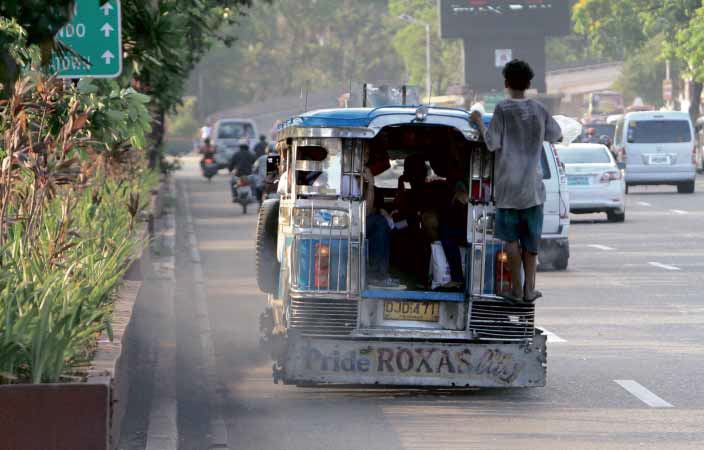
Beyond the trucks, Japan's used diesel engines have created a separate problem. Businesses strip complete engines from surplus vehicles and sell the units worldwide — and the Philippines is a major market. These engines end up in Jeepneys, OTJs, buses, and custom fabrications despite modernization efforts. The irony is sharp: the Philippines is actively fighting air pollution while simultaneously importing the very engines that generate it. Most Jeepneys, buses, and OTJs here are fabricated rather than factory-built, using surplus Japanese components sourced from local auto shops — inline-4 diesels all the way up to V12 diesel engines are available. The result is a fleet of vehicles where maintenance is treated as optional. The old Jeepney belching blue smoke isn't a mystery — it's worn piston rings or valve seals that need an overhaul the driver can't afford. So it keeps running, keeps smoking, and everyone around it breathes the result. Japanese engineering saves the operator money and harms everyone else.
|
| A Jeepney with black smoke — the visible cost of deferred maintenance |
The Dirty Truth About JDM Exports
JDM culture is dominated by the image of Skylines, Supras, RX-7s, and Evos — but those are a tiny fraction of what Japan actually exports. The vast majority are ordinary cars, trucks, and engines going to countries where emissions standards are weak and maintenance is inconsistent. In those environments, these vehicles contribute directly to air pollution, particulate matter, and the accelerated degradation of the ozone layer. An old diesel that passes Japan's strict Shaken gets exported to a country with no equivalent standard, runs without maintenance for years, and generates the kind of emissions that Japan's own laws were designed to prevent.
There's also the waste problem. Abandoned and stripped vehicles create heaps of end-of-life metal, rubber, plastic, and battery acid in countries that often lack the infrastructure to handle automotive waste properly. Fuel leaks, battery disposal, and stripped hulks sitting in fields are a slow environmental disaster that doesn't make headlines but accumulates over decades.
And then there's traffic. Cheap imported cars lower the barrier to vehicle ownership, which sounds positive — but in cities with already strained infrastructure, an accelerating influx of additional vehicles creates congestion, parking pressure, and road degradation that local governments aren't equipped to handle.
The most important thing to understand about Shaken is who benefits from it. Japan's domestic automakers get a steady stream of new car buyers forced by the system to upgrade. The government collects registration and inspection fees. Modern, safe, and clean vehicles stay on Japanese roads. The cost of all of this is quietly exported to the rest of the world in the form of older, dirtier, less safe vehicles that end up in countries least equipped to manage them. In 2024 alone, a record 1,573,479 of those vehicles shipped out — and the number keeps growing.
Conclusion
I'm not saying Japan is bad — they've gifted the world genuinely reliable, well-engineered vehicles that give a second life of useful service in countries that need affordable transportation. That's real. But there's a cost on the other side of the ledger that doesn't show up in Japan's export statistics: emissions, waste, safety risks, and infrastructure strain absorbed by the receiving countries.
The argument I'd make is that Japan has the engineering capability and the recycling infrastructure to handle more of its own end-of-life vehicles domestically — and that would be better for everyone. What's clear is that maintenance is the dividing line between a useful second life and a rolling hazard. Japan enforces that line strictly at home through Shaken. Once those vehicles cross the ocean, that enforcement disappears — and the rest of the world lives with the consequences.
Thank you so much for tuning in. I'll see you guys soon.


Comments
Post a Comment