POCO: Xiaomi's M Division That Changed Budget Gaming Forever
Most people buying ₱50,000 phones don't know a ₱20,000 phone exists that beats it in benchmarks. That's POCO's entire story — a brand born from one question: why should raw performance cost a fortune? You may not have heard of them yet, but in the world of budget performance smartphones, POCO has been quietly embarrassing flagships for years. Today, we dive into POCO — the brand that changed the rules of what affordable phones can do.

|
| POCO by Xiaomi — Little name. Massive performance. |
History of POCO
Mobile gaming performance was a big deal in the late 2010s. Gaming phones like the ROG Phone, ZTE RedMagic, and Razer Phone existed — but they were expensive. Xiaomi had their own gaming phone brand, Black Shark, which received strong reviews. But there was a problem: on the other side of the market, tech enthusiasts and gamers were stuck choosing between expensive gaming phones or expensive flagships. Nobody was filling the gap between "actually powerful" and "actually affordable."
So Xiaomi decided to fix it. They launched POCO in 2018 as a sub-brand with one goal: create a device that performs at flagship and gaming phone levels for a fraction of the price. The name itself means "little" — a small team within Xiaomi with big ambitions. Their first device was the Pocophone F1, and it became a massive global hit. Snapdragon 845 paired with Adreno 630 — the same chip inside flagships costing three times as much. But the detail that made everyone pay attention? It featured real liquid cooling on a $300 phone. Not a marketing gimmick — an actual copper tube loop of evaporation, heat transfer, and condensation keeping the chip cool under sustained load. They didn't fake it. They made it possible.
This is where POCO's philosophy was born: "Everything you need, nothing you don't." No unnecessary extras inflating the price. Just honest, powerful hardware at a price that respects your budget.

|
| Pocophone F1 — Where the Flagship Killer was born |
The Rising Flagship Killers
The Pocophone F1 was a massive commercial success — selling over 700,000 units globally, excluding China where Xiaomi released the Mi Play with less aggressive specs. But 2019 brought challenges. Key POCO team member Jai Mani departed. Rising chip prices complicated the formula. Xiaomi put POCO on hold while they figured out how to replicate the F1's success without compromising the value promise.
The comeback came in early 2020. POCO India became independent, and the global lineup expanded rapidly — the X2, F2 Pro, M2, and C3 all debuted that year. 2020 was POCO's biggest year since launch. The F2 Pro brought the Snapdragon 865 — a genuine flagship chip — at mid-range pricing. The formula was proven repeatable. POCO wasn't a one-hit wonder. It was a philosophy that worked every time they committed to it.
From 2020 onward, POCO became exactly what they set out to be: the M Division of performance smartphones. The analogy is precise — just as BMW's M Division takes standard models and extracts maximum performance from them, POCO takes Xiaomi's domestic Redmi lineup and transforms it for the global performance market.

|
| POCO F2 Pro with Snapdragon 865 — flagship performance, non-flagship price |
The Rebadged Redmi — But in a Good Way
Here's something POCO is completely transparent about: their phones are based on Xiaomi's domestic Redmi lineup. And that transparency is exactly what separates honest rebadging from deceptive rebadging.
The mapping is clean and consistent. The Redmi K series — high performance flagships — becomes the POCO F series. The Redmi Turbo series — mid-range performance — becomes the POCO X series. The Redmi Note series — balanced mid-range — becomes the POCO M series. The Redmi A and Number series — budget — becomes the POCO C series.
What POCO adds to each of these is significant: they remove the China-specific bloatware and aggressive ads that fill domestic Redmi devices, tune the software for global markets, and price them competitively against international competition rather than domestic Chinese pricing. The hardware underneath is genuine. The chips are real. The specs match what's advertised.
This is worth stating directly because not all rebadging is created equal. Some manufacturers rename old chips with new numbers specifically to mislead buyers — something this writer experienced firsthand with the Infinix Note 40 5G, which used a Dimensity 7020 hiding a 2022 Dimensity 930 underneath, paired with a PowerVR GPU that developers had already abandoned. POCO's rebadging of Redmi hardware is the opposite: fully disclosed, honestly specced, and consistently delivering what it promises. The difference between Infinix's deception and POCO's transparency is the difference between a phone that betrays you and a phone that respects you.

|
| POCO's full lineup — every tier covered, every price respected |
What's New With POCO?
In late 2025, POCO unveiled the F8 Pro and F8 Ultra — both based on the Redmi K90 Pro series. The F8 Ultra is powered by the Snapdragon 8 Elite Gen 5 with Adreno 840 GPU, priced at approximately ₱39,999. The F8 Pro uses the Snapdragon 8 Elite with Adreno 830, coming in under ₱32,000. Both deliver genuine flagship performance. The F8 Ultra achieved an AnTuTu v11 score of 3,887,841. The F8 Pro hit 3,023,050. For comparison, the iPhone 17 Pro Max scores 2,331,417 on the same benchmark. Two POCO phones beating Apple's most powerful consumer device — at significantly lower prices.
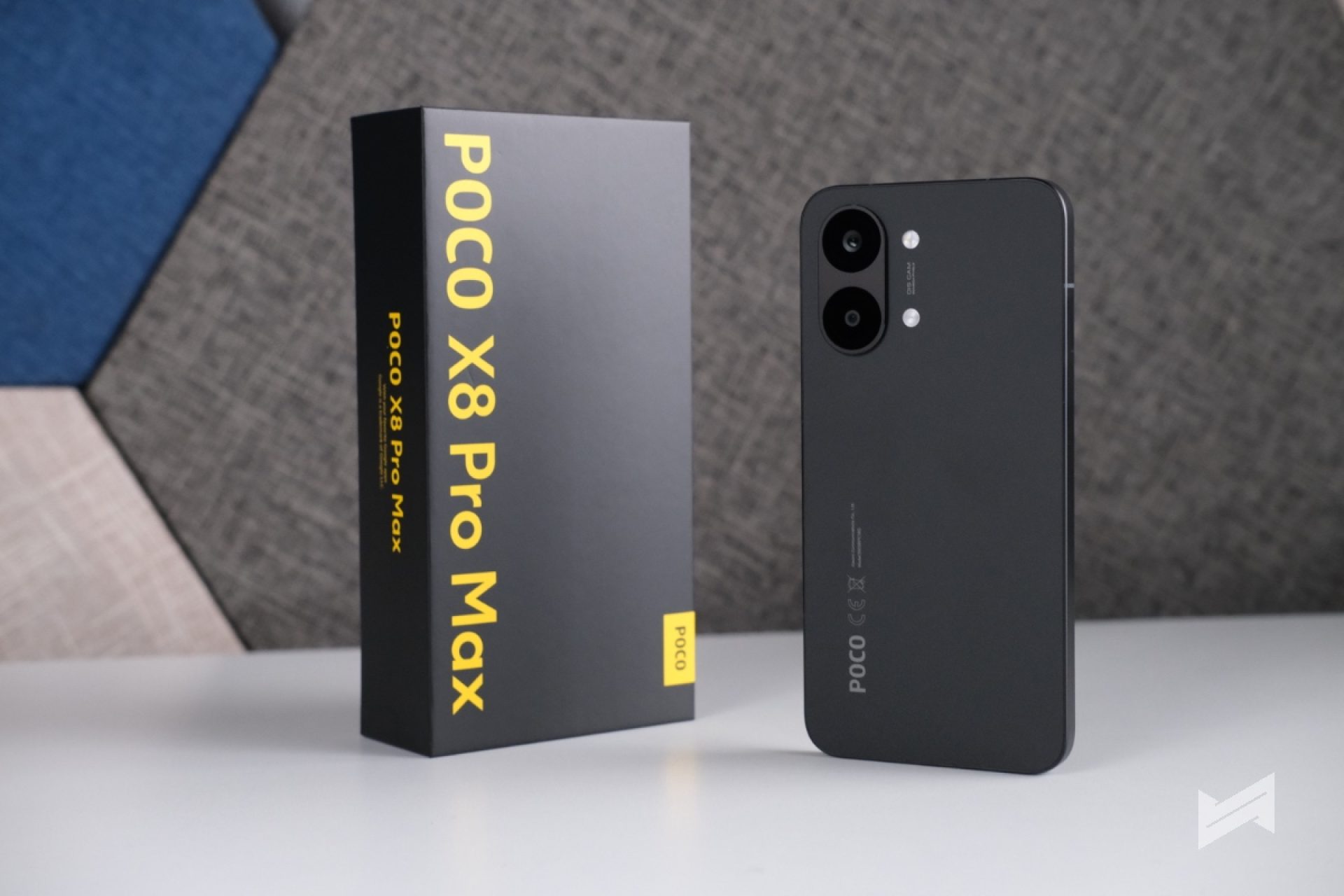
In 2026, POCO launched what may be their most important phones yet — the X8 Pro and X8 Pro Max, based on the Redmi Turbo 5 and Turbo 5 Max. The X8 Pro Max features MediaTek's Dimensity 9500s — a genuine 3nm flagship chip using an all-big-core architecture with the Immortalis-G925 MC12 GPU. The X8 Pro uses the Dimensity 8500 Ultra at 4nm. Both are paired with Mali GPU architectures that every major game developer actively supports and optimizes for.
The X8 Pro Max's headline achievement beyond the chip? An 8,500mAh silicon carbon battery — larger than the iPhone 17 Pro Max's battery by a significant margin, on a phone costing a fraction of the price. AnTuTu v11 score: 2,791,128. At ₱20,999 for the 512GB variant at SM stores in the Philippines, the X8 Pro Max represents exactly what POCO has always promised — the best possible hardware at the lowest honest price.
|
| POCO X8 Pro Max — The ultimate flagship killer for under ₱21,000 in the Philippines |
Buyer's Guide: Which POCO Is Right for You?
Buying your first POCO? Start with the most important question: what's your budget and what do you actually need it for?
POCO C series (₱5,000–₱8,000) — Honest Budget: Entry level. Snapdragon 4-series or equivalent. Good for calls, social media, light gaming. Don't expect Genshin Impact. Do expect a phone that does what it promises at the price it charges.
POCO M series (₱8,000–₱12,000) — Balanced Mid-Range: The M8 uses the Snapdragon 6 Gen 3 — solid for gaming with proper Adreno GPU support. Heavy games like Genshin Impact or Wuthering Waves work at medium settings. A genuine mid-range phone that earns that description honestly — something not every brand can say.
POCO X8 Pro and Pro Max (₱18,999–₱27,999) — Performance Mid-Range: This is where POCO gets serious. The X8 Pro Max with Dimensity 9500s and Immortalis-G925 MC12 handles every game on your list at maximum settings. The 8,500mAh battery lasts through the longest gaming sessions. The X8 Pro with Dimensity 8500 Ultra sits just below — still significantly more powerful than most phones at its price. Both use honest, genuine chips — not rebadged old silicon with new names.
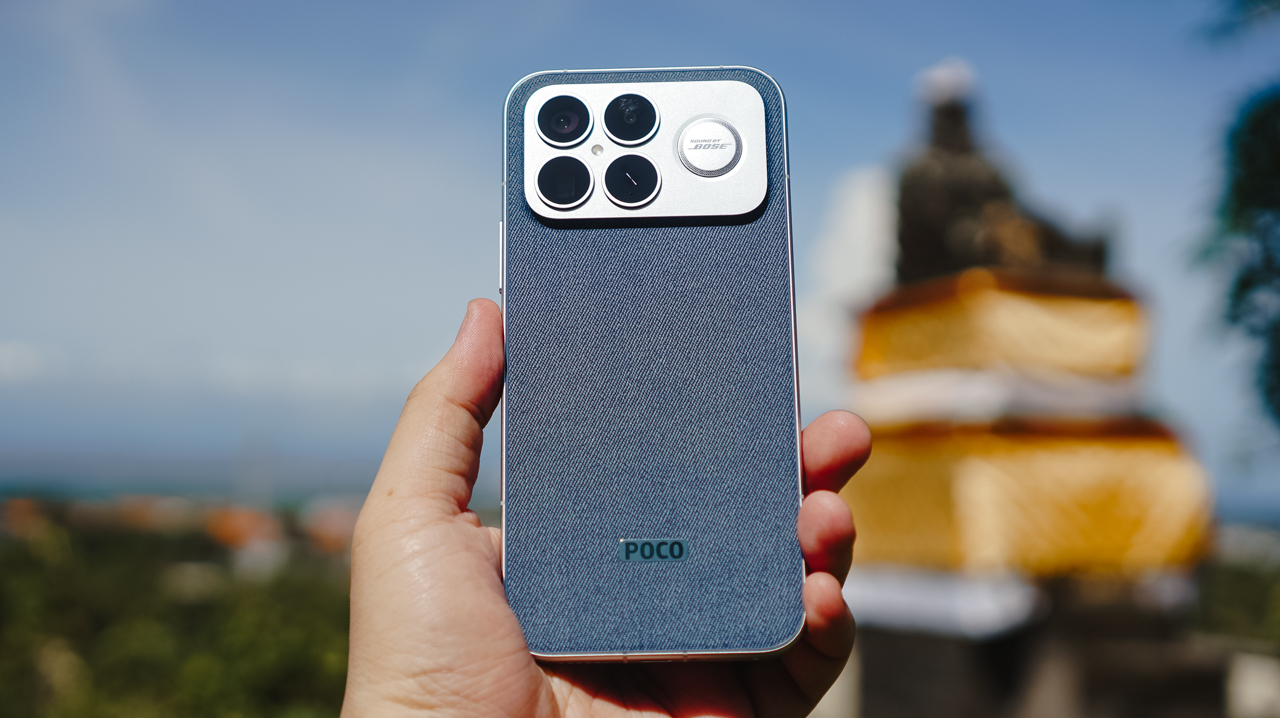
POCO F8 Pro and F8 Ultra (₱32,000–₱39,999) — Near Flagship: Snapdragon 8 Elite territory. The F8 Ultra adds 50W wireless charging, 16GB RAM, better audio, and triple cameras over the F8 Pro. Both beat the iPhone 17 Pro Max in AnTuTu benchmarks. The F8 Pro is powerful enough to last years of use at under ₱32,000. The F8 Ultra adds premium extras for those who want them. If you want the absolute best POCO experience with no compromises — this is it.
|
| POCO F8 Ultra — denim finish, Snapdragon 8 Elite Gen 5, flagship performance for non-flagship money |
Why POCO Matters Beyond the Benchmarks
In the Philippine market specifically, POCO's existence is genuinely important. The budget smartphone segment here — phones under ₱15,000 — is dominated by brands that use flashy spec sheets to disguise compromised hardware. Large storage numbers. 5G branding. Gaming collabs. All designed to attract buyers who don't have the resources to investigate what's actually inside.
POCO operates differently. Their specs are what they say they are. Their chips are what they claim. Their GPUs are actively supported by game developers. When POCO says a phone is gaming capable — it actually runs games. That sounds like a low bar. In the Philippine budget phone market, it isn't.
For a young gamer or content creator in the Philippines with a tight budget — POCO X8 Pro Max at ₱20,999 isn't just a good deal. It's proof that you don't have to choose between affordability and honesty. You don't have to accept a phone that lies about its capabilities to fit your budget. You don't have to trust a Mobile Legends collab and hope the specs underneath match the marketing.
POCO shows that respecting your buyer costs nothing extra. It just requires the will to do it.
Conclusion
POCO wanted to bring what domestic Chinese manufacturers were cooking internally — extreme specs at honest prices — to the global market. Eight years after the Pocophone F1 proved the concept, they're still doing exactly that. From Snapdragon 845 liquid cooling at $300 in 2018 to Dimensity 9500s with 8,500mAh battery at ₱20,999 in 2026 — the philosophy never changed. Only the hardware improved.
They don't disappoint. They don't rebadge old silicon with new names. They don't hide dead GPUs behind collab branding. They don't abandon buyers after two years and expect them to spend three times as much on the next generation. They just find the most powerful chip available, put it in a phone that can handle it thermally, charge you the least amount possible for it, and let the benchmarks do the talking.
Think of it like the Noble M600 we wrote about in our Famous Engines article — strip away everything unnecessary, keep only what makes it exceptional, and trust the driver with the rest. POCO strips away the premium brand tax, the unnecessary accessories, the gaming phone gimmicks, and gives you raw performance in your hands. No shoulder triggers. No RGB. No supercar-shaped charging bases. Just a phone that does what it promises, honestly, at a price that doesn't require you to choose between your hobby and your hardware.
Why pay ₱50,000 for a name when ₱20,999 buys you something that beats it in benchmarks?
That's POCO. And that's why it matters.
Written by Pi of Mann — a gamer, writer, and content creator from Baguio, Philippines, who learned the hard way what happens when a phone doesn't keep its promises.


Comments
Post a Comment